
Todays blog is going to be very different. I’m going to split it into two parts, the morning and then afternoon as a separate post. The reason for this is because there are some pictures in the morning post that you might find distressing so you can skip this post completely if you are concerned.
This morning we are off to the Hiroshima Peace Park. On the 6th August 1945 and American B29 bomber named Enola Gay, after the pilots mother, dropped the first ever atomic bomb over the city of Hiroshima in Japan. In the first second 140,000 people were killed or seriously injured. Many of the injured died in the first couple of days. It is estimated that over 200,000 people died as a direct result of the bomb with many succumbing to cancers caused by the radiation from the bomb. In many respects the people who died in the initial blast were the lucky ones as the injuries sustained by the survivors and the pain they must have suffered before they to died is unimaginable. Hiroshima are working very hard to try and ensure that this never happens again.
One of the very few surviving buildings from the blast is now what is known as the Bomb dome and is preserved as a stark reminder of the destructive power of what by todays standards was a very small bomb.

This is what it looks like today

What it looked like before the bomb

and what it looked like just after the bomb

The bomb levelled and area about 4Km across which was the majority of Hiroshima.
Straight after the bomb there were hundreds of people critically injured and no functioning aid available so they were in great pain and many died without receiving any help in the most distressing ways. There was an incredibly well curated exhibition in the museum with original accounts and photographs from the time.

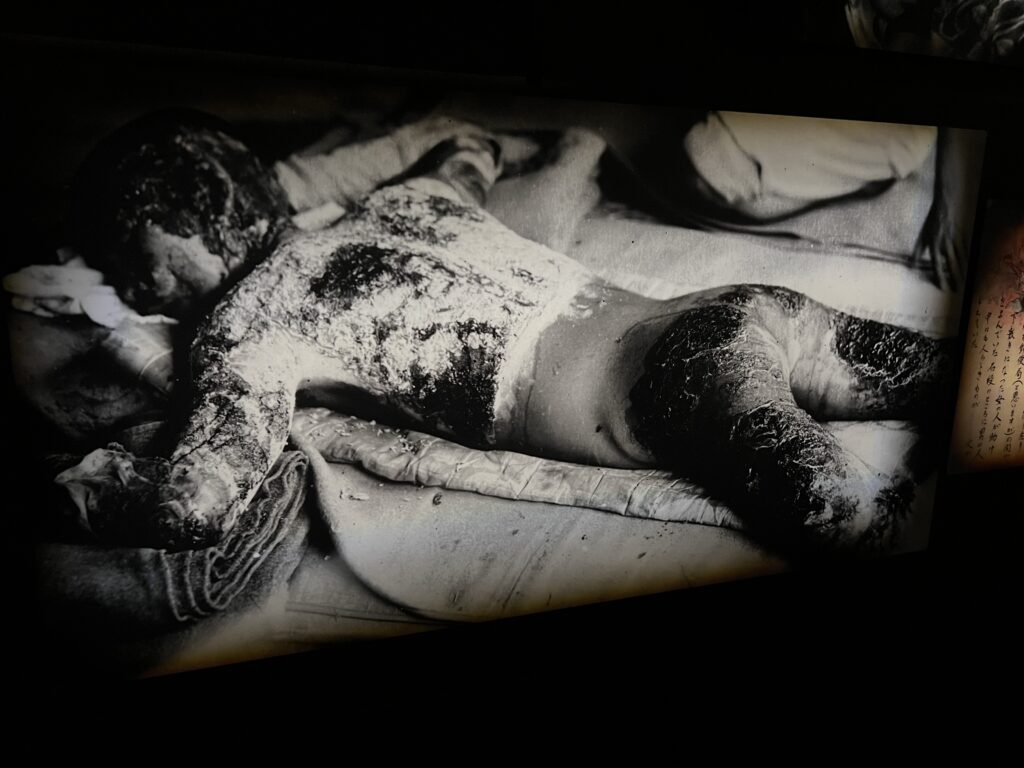
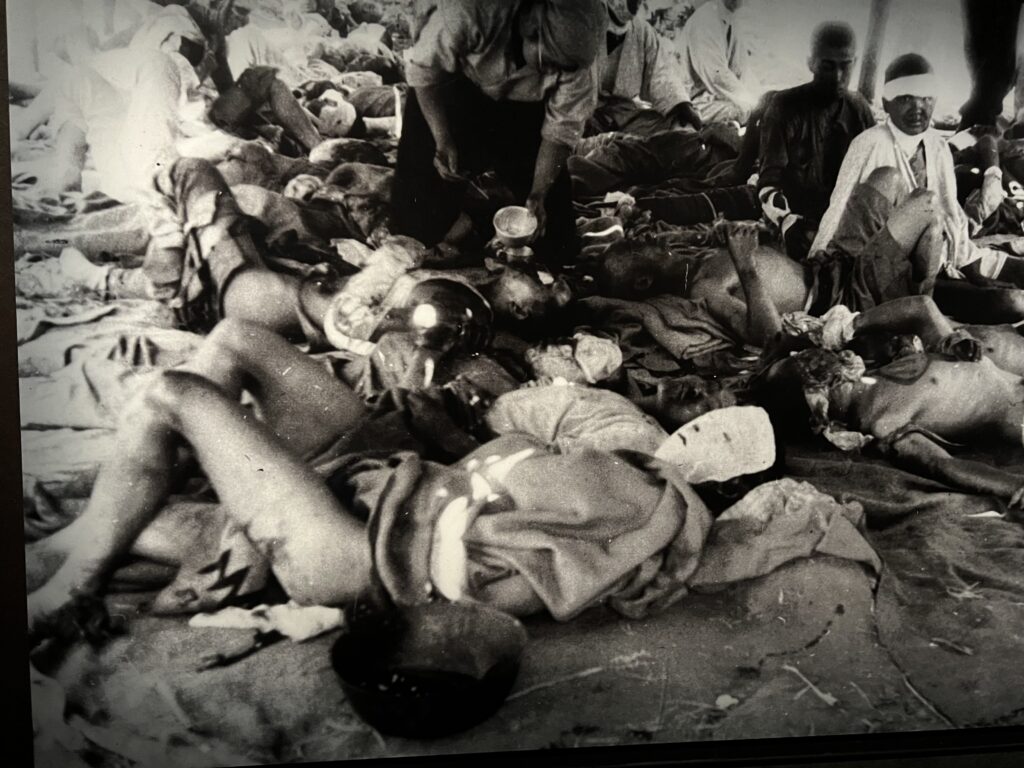
I will not burden you with the graphic details of the injuries people suffered but will say that I can not find words to describe how sad, angry and disgusted that this treatment could be indiscriminately meted out on women and children non combatants.
There were masses and masses of school groups there, all very respectful and it is good that they learn about this so they can help to prevent it in future. One thing sticks in my mind of one small boy probably 12 or 13 obviously found this very difficult to deal with and had covered his eyes. He was being guided and supported by two older boys with their arms around his shoulders. No ridicule, no name calling just real compassion.

There were multiple stories from just after the bomb to years later but one stuck in my mind.
A little boy of three called Shin Ichi, I hope I have that right, was riding his trike when the bomb went off. He was very badly burned and despite everything his father tried to do to save him he died of his injuries on the night of the 6th. His father was too distraught to have hime cremated so buried his little body and the trike he was riding in his back yard under a old steel helmet. His father was consumed with grief for the next 40+ years as he survived the blast and gave an oral account after he recovered Shin Ichi’s bones in 1980 and reburied them in the family grave. He donated the trike and helmet to the museum. The museum is full of stories like this showing the lasting effects of the bomb.
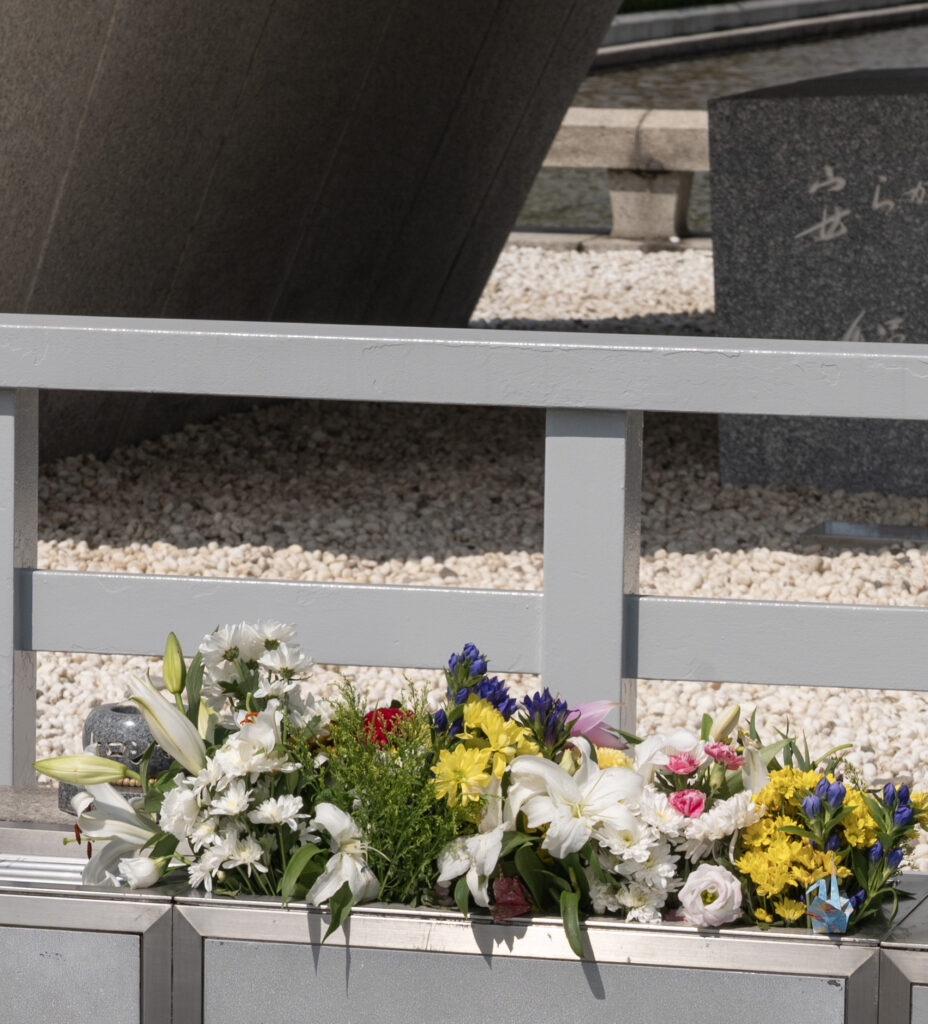
The Origami Crane, the sign of peace, has become closely associated with Hiroshima and you will see later is often made by school children and left by the children’s memorial. Chris and I had both made one at the tea ceremony and we felt it was very appropriate to leave them as we paid our respects by the memorial.

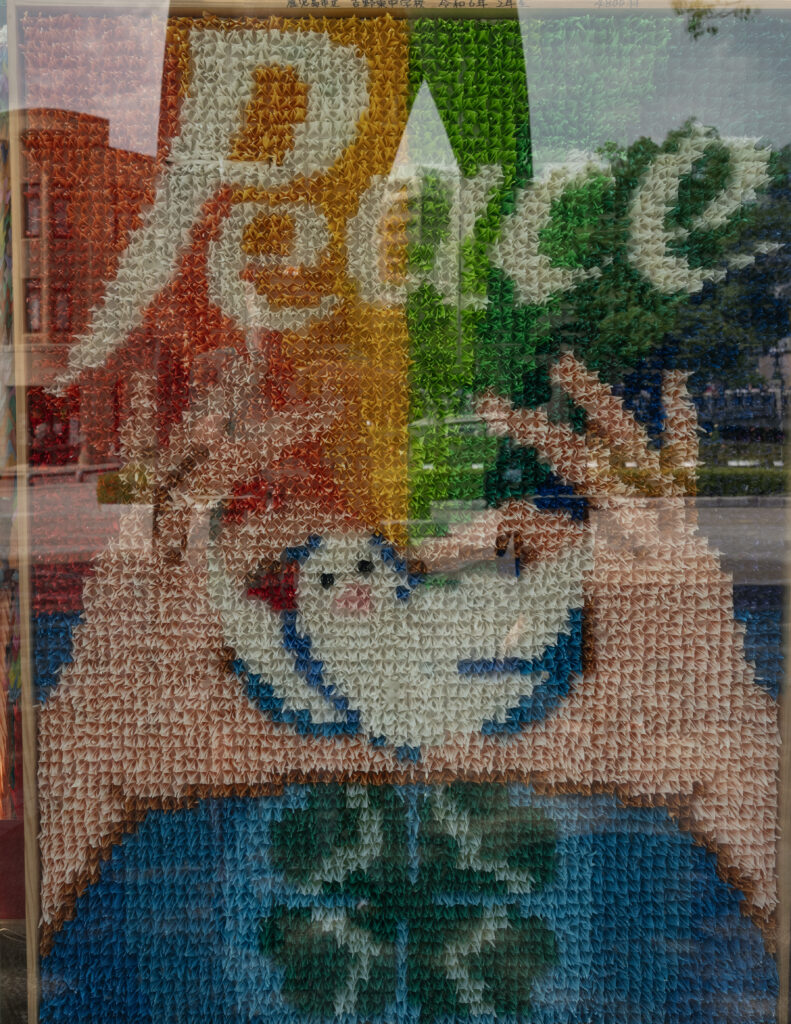
Just one of the many pictures made entirely from Cranes by school children.
Places like this always arouse strong emotions and worries given the state that the world is in now but you can only hope that sense will prevail and we will never see this type of catastrophe again.
I’m to shattered after this blog to do any more but will put an additional post covering the rest of the day tomorrow.


XX🌳🧚🌳XX